
A gurgling toilet at midnight is scary. Raw sewage bubbling up through your basement floor drain is worse. When wastewater reverses direction and fills your tubs, sinks, or showers, every minute counts to reduce exposure risks and limit potential property damage.
Stop using water immediately. Shut off your main water valve, keep your family away from contaminated areas, and locate your exterior cleanup access cap.
We at Drain Cleaning Near Me LLC have spent 30 years responding to plumbing panics across Central Virginia. As a family-run, certified small, women, and minority-owned local business, we know how fast a minor blockage turns into a catastrophe. When you need reliable sewer line cleaning in Glen Allen, VA, our licensed, bonded, and insured team is ready 24/7 with transparent pricing and no hidden fees.
Step 1: Immediate Containment (Minutes 0 to 15)
When wastewater backs up into your fixtures, take these steps in exact order to halt contamination:
- Stop all water consumption. Do not flush toilets, run faucets, run the dishwasher, or start laundry. Any water added upstairs flows straight down to the lowest open drain.
- Shut off the main water valve. Locate your main shut-off inside your home (typically near the water meter or water heater) and turn it clockwise. Stopping incoming water prevents accidental usage.
- Turn off electrical power to affected rooms. If raw sewage reaches power outlets, baseboard heaters, or appliances, switch off the breaker for those zones at your main panel. Stand on dry ground while touching the breaker box.
- Evacuate children and pets. Sewage carries harmful pathogens like E. coli, Salmonella, and Hepatitis A. Isolate the affected area immediately.
- Open windows for ventilation. Sewer gas contains hydrogen sulfide and methane. Open nearby windows to clear the air, provided outdoor weather permits.
Step 2: Diagnostic Checklist & Locating Your Cleanout
Once you stabilize the immediate flooding, gather diagnostic details before calling a specialist.
Locating Your Exterior Cleanout
Your sewer line cleanout is typically a capped pipe fitting located outside the home, although its exact location and appearance can vary by property and plumbing installation. It may be found near the foundation, in the yard, or closer to the property line.
- If the cleanout is holding standing water: The blockage may be downstream of the cleanout, potentially toward the municipal connection.
- If the cleanout is dry inside: The blockage may be upstream of the cleanout, potentially within the home’s private plumbing.
Diagnostic Flow Summary
- Multiple Fixtures Backed Up? (Toilet + Tub + Sink)
- YES: Main Line Blockage -> Check Exterior Cleanout Threaded Cap
- NO: Isolated Fixture Blockage -> Clogged Branch Drain Line
- Exterior Cleanout Inspection Result:
- Standing Water Present: Obstruction downstream toward street
- Pipe Interior Dry: Obstruction upstream under house slab
Common Emergency Causes
- Tree Root Intrusion: Willow oaks, maples, and river birches common to Henrico County stretch roots into aging clay or cast iron pipe joints searching for water.
- Grease & Fats: Cooking oils poured down kitchen sinks cool, solidify, and catch debris inside main lines.
- Pipe Collapse or Belly: Clay and orangeburg pipes break down over decades under heavy clay soil shifts.
- Flushable Wipes & Foreign Objects: Non-dispersible wipes bind with grease to form dense plugs inside residential piping.
Step 3: Safe Mitigation & What NOT to Do
While waiting for emergency crews to arrive, handle contaminated zones strictly using personal protective equipment (PPE).
- Wear proper protective gear: Put on non-porous rubber boots, heavy-duty nitrile gloves, and an N95 respirator mask before stepping near standing wastewater.
- Avoid chemical drain openers: Never pour chemical drain cleaners into a backed-up fixture. Liquid lye and acid solutions will trap burning chemicals above the plug, posing severe chemical burn hazards to technicians operating clearing tools.
- Skip DIY clearing tools: Avoid using home snakes or augers on a backed-up main sewer line unless you know the equipment is appropriate for the pipe. Improper use can damage vulnerable piping or leave part of the blockage behind.
- Document everything for insurance: Take clear photos and videos of flooded areas, floor coverings, and damaged belongings for your insurance claim before starting any clean-up.
Step 4: Professional Sewer Line Restoration
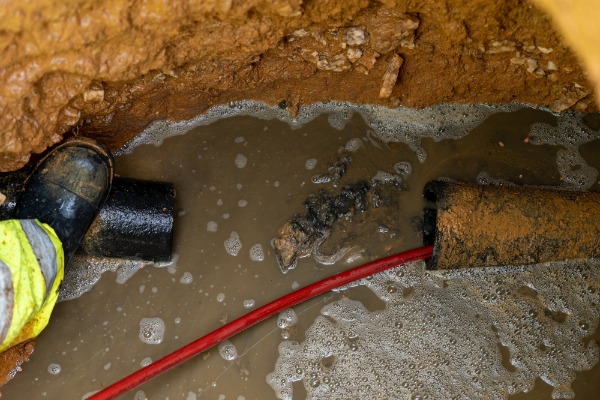
Restoring your main drain pipe requires specialized commercial gear operated by certified technicians:
- High-Resolution Video Inspection: Best used for pinpointing pipe cracks, bellies, and root entry zones using a waterproof HD camera with a sonde transmitter to map exact depths.
- Mechanical Cable Snaking: Best used for breaking up soft tissue paper and grease clogs via rotational steel blades on heavy wire cables for quick, temporary relief.
- Main Line Cleaning: Professional cleaning methods can address stubborn grease, buildup, and root intrusion, with the appropriate equipment selected based on the pipe’s condition.
- Hydro Jetting Sewer Line: Uses high-pressure water to remove accumulated grease, buildup, and certain root intrusions from suitable sewer lines, with pressure and equipment adjusted to the pipe’s condition.
When heavy root masses or grease calcifications choke your pipes, standard cabling leaves residue behind that catches new debris within weeks. Our technicians apply high-pressure hydro jetting sewer line technology to blast line walls completely clear without harsh chemicals.
The Hidden Link: HVAC Systems & Drainage Infrastructure
Many homeowners don’t realize that indoor environmental controls directly interact with residential drainage networks. During humid Virginia summers, central air conditioning units extract gallons of condensate water daily from indoor air.
If your central air system routes its primary condensation drip pipe directly into your household drain stack—and your main line backs up—that sewage water can push up into condensate drip pans or basement floors near your HVAC unit.
When choosing between home mechanical upgrades, such as evaluating a ductless AC unit versus a whole-home central air setup, consider how each system handles moisture condensate:
- Central Air Systems: Condensate drain lines often tie straight into plumbing waste vents or basement floor drains. If a main sewer line clogs, backing up wastewater can compromise the HVAC drain pan, leaking dirty water across mechanical rooms.
- Ductless AC Systems: Ductless mini-split units route condensation through independent wall penetrations directly to exterior garden beds or dedicated dry wells. This decouples your cooling system’s moisture disposal entirely from your main plumbing stack, eliminating cross-contamination risks during a sewer main failure.
Frequently Asked Questions
What is the very first thing I should do if sewage backs up?
Stop using all water fixtures immediately and turn off your home’s main water shut-off valve to prevent additional sewage accumulation.
How do I know if the blockage is in my line or the city’s main?
Check your outdoor cleanout pipe; if it holds standing water, the clog is downstream toward the municipal pipe, but if it is empty, the blockage lies within your private property plumbing.
Emergency Sewer Repairs Done Right
A sewage emergency threatens your home, health, and daily schedule. Remember the core steps: shut off your water supply, refrain from flushing, check your outdoor cleanout, and avoid hazardous chemical drain openers.
At Drain Cleaning Near Me LLC, we bring 30 years of hands-on expertise to every call. We stand behind our work with a lifetime labor warranty and a 100% satisfaction guarantee. As a family-run, 5-star Google-rated business, we deliver same-day drain cleaning service and emergency support with fast response times, 24/7, including weekends and holidays.
Don’t let a mainline backup ruin your property. Call us today for transparent pricing, fast dispatch, and complete peace of mind.